
Equipment
Conveyor Equipment for Truck Loading and Unloading
Choose from three conveyor types for different loading conditions and cargo-handling requirements. We review your site dimensions, vehicle type, cargo characteristics and required conveying capacity to help identify a suitable configuration.
- 3 conveyor types
- Custom widths & extensions
- Dock-level & ground-level
- Configured per site
Dock or no dock: start here
Your single biggest constraint is whether the trailer floor can sit level with your building. Pick the situation that matches your site and we will take you to the matching line.
Compare Our Conveyor Types
Dock-level loading & flat transport
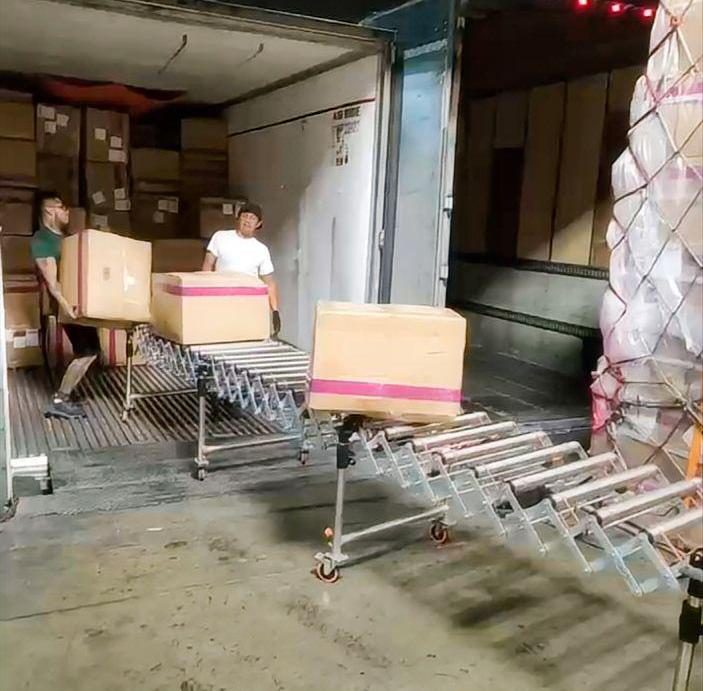
Telescopic Roller Conveyor
Extends to reach deep into the trailer at dock level (within the extension range confirmed for your model), then retracts to a compact parked length.
View specifications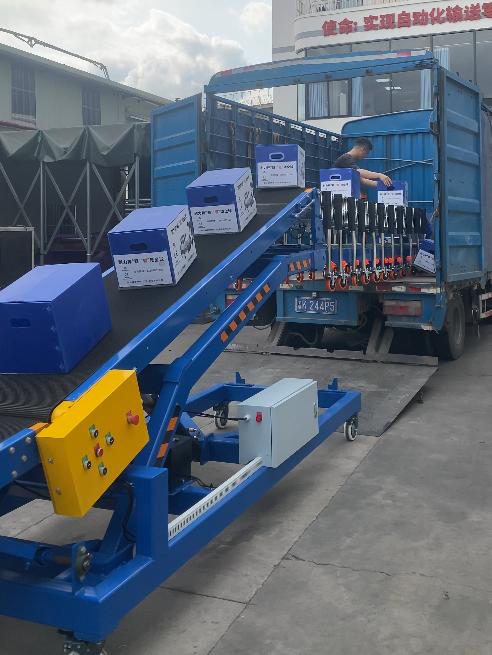
Ground-level loading, no dock
Hydraulic Lift & Incline Conveyor
Raises cargo straight from the ground and climbs into the trailer where there is no platform to bridge from.
View specifications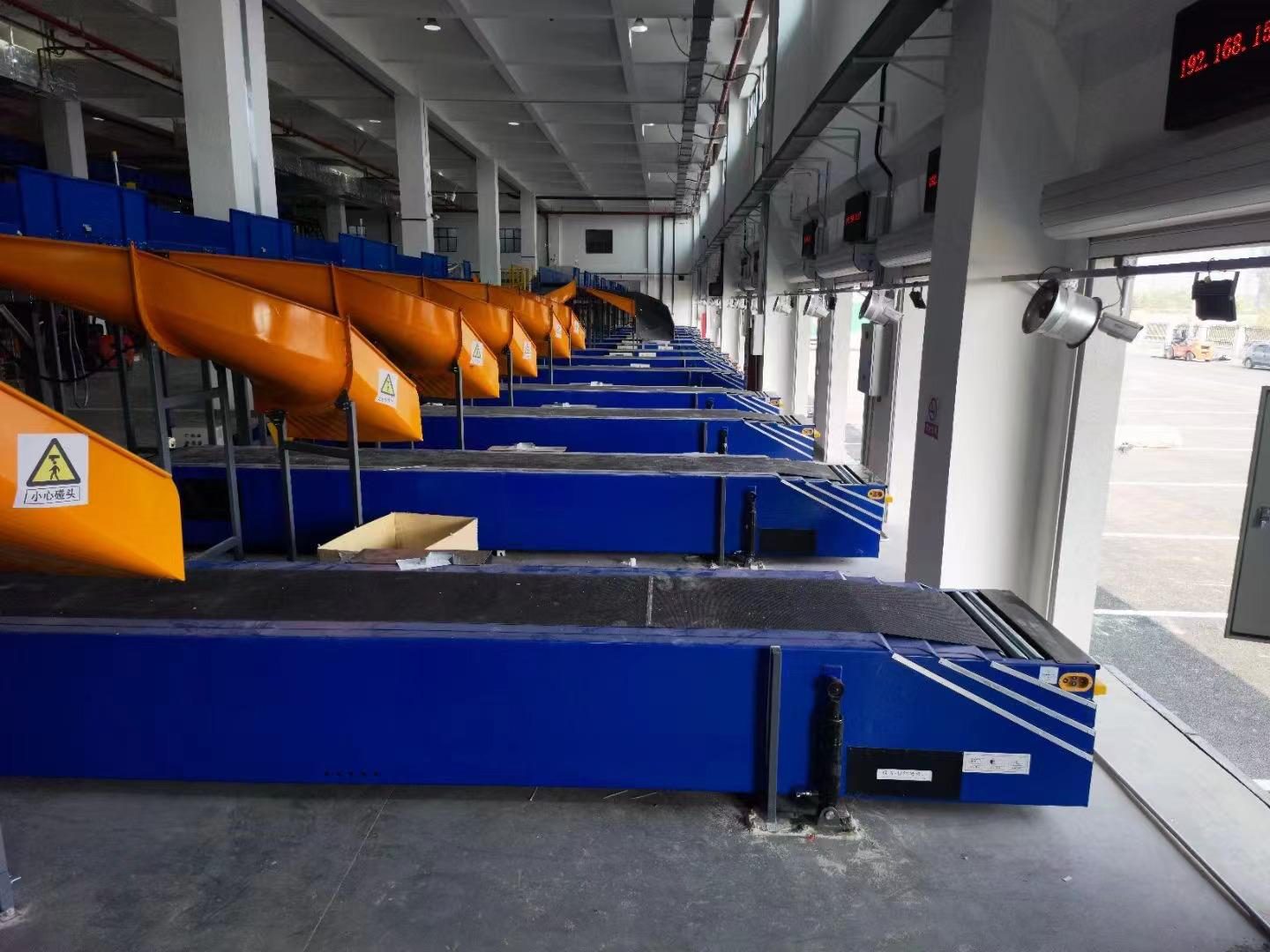
Express parcels & mixed package flow
Telescopic Belt Conveyor
A continuous belt surface for high-volume, mixed-size parcels; works with or without a loading dock.
View specificationsEquipment in operation
See the conveyors on real workshop floors
Short clips filmed on our workshop floor: a roller line with an incline section, a telescopic belt conveyor, and a close look at the roller surface and telescopic joint.
Side-by-side comparison
Read across one row to see how the lines differ. Values below are the published standard ranges; anything your site needs outside them is handled as a custom build.
| Parameter | Telescopic Roller | Hydraulic Lift & Incline | Telescopic Belt |
|---|---|---|---|
| Site requirement | For sites with a loading dock where the trailer floor sits level with the platform, and for flat in-plant transport. | For ground-level loading without a loading dock. | With or without a loading dock (both setups) |
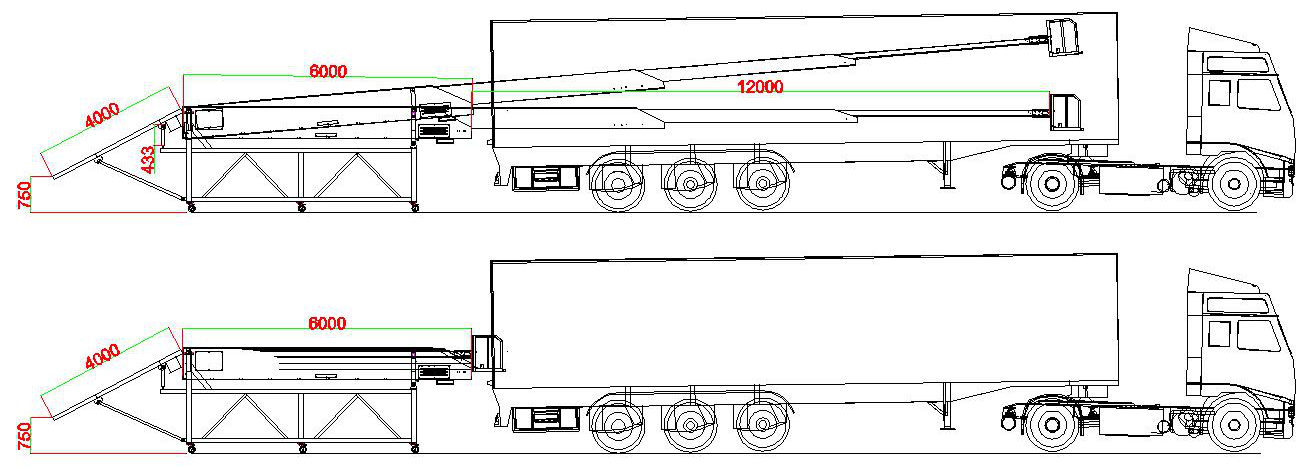
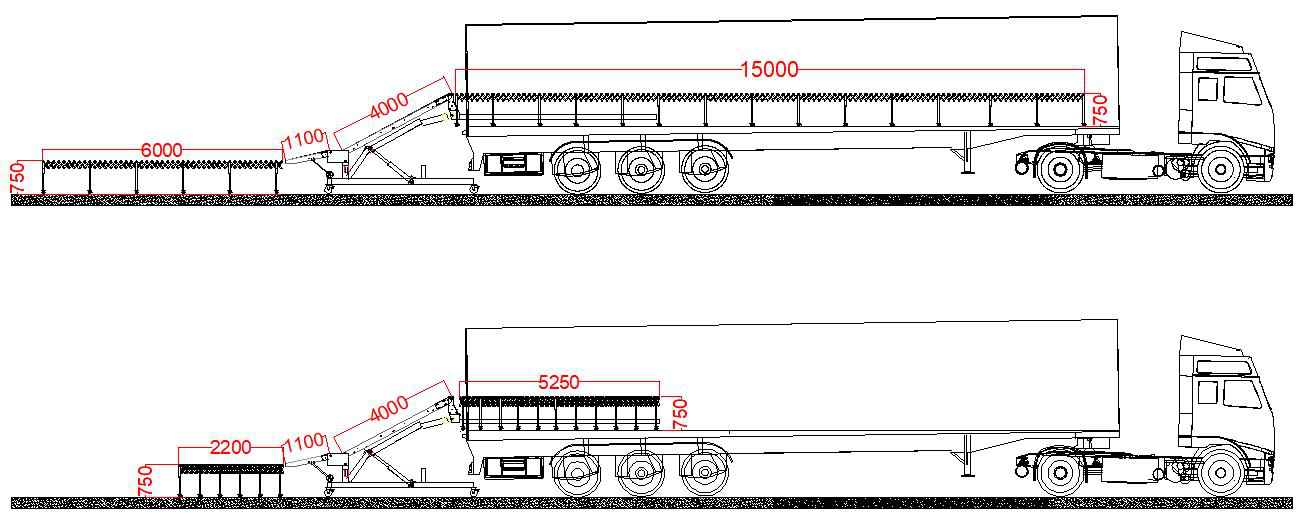
| Lift / incline | Not applicable: works at platform height | Platform lifts from ground level 40 cm to 95 cm; incline section 3 m; max working height 2.4 m. | No-dock setup uses a mobile high stand plus hydraulic lift arm |
| Widths | Standard widths 50 / 60 / 80 cm; custom 1 m, 1.2 m or wider. | Matched to model size | Standard widths 60 / 80 cm; custom 1 m. Extends 6 m to 12 m. |
| Reach into the vehicle | Extends deep into the trailer, retracts compactly when parked | Front telescopic roller line; 6 / 10 / 12 / 15 m depending on model | Extends 6 m, 8 m or 12 m by model |
| Cargo handled | Rubber-coated rollers for bagged cargo (woven, sack, kraft bags); bare rollers for flat-bottom cartons, foam boxes and totes. | Light and heavy cargo; model sized to the vehicle | Mixed package types and sizes (express / logistics flow) |
| Vehicle coverage | Dock-served trucks and containers | Suits all vehicle body types below 17.5 m semi-trailers, and handles both light and heavy cargo. | Dock or no-dock loading |
| Operators | Confirmed with your configuration | Confirmed with your configuration | No-dock setup: mobile high stand + hydraulic lift arm + front operator platform + tail incline line; one operator per end. |
| Build | Each unit is a non-standard custom build to your site dimensions; long lines are built in sections and retract compactly when not in use. | Each unit is a non-standard custom build to your site dimensions; long lines are built in sections and retract compactly when not in use. | Each unit is a non-standard custom build to your site dimensions; long lines are built in sections and retract compactly when not in use. |
Widths, surfaces & build
01
Width
Roller lines ship in 50 / 60 / 80 cm, with wider builds at 1 m, 1.2 m or more. Belt lines come in 60 / 80 cm, custom 1 m.
02
Contact surface
Roller surface is chosen by cargo: rubber-coated for bagged cargo (woven, sack, kraft), bare rollers for flat-bottom cartons, foam boxes and totes.
03
Sectional build
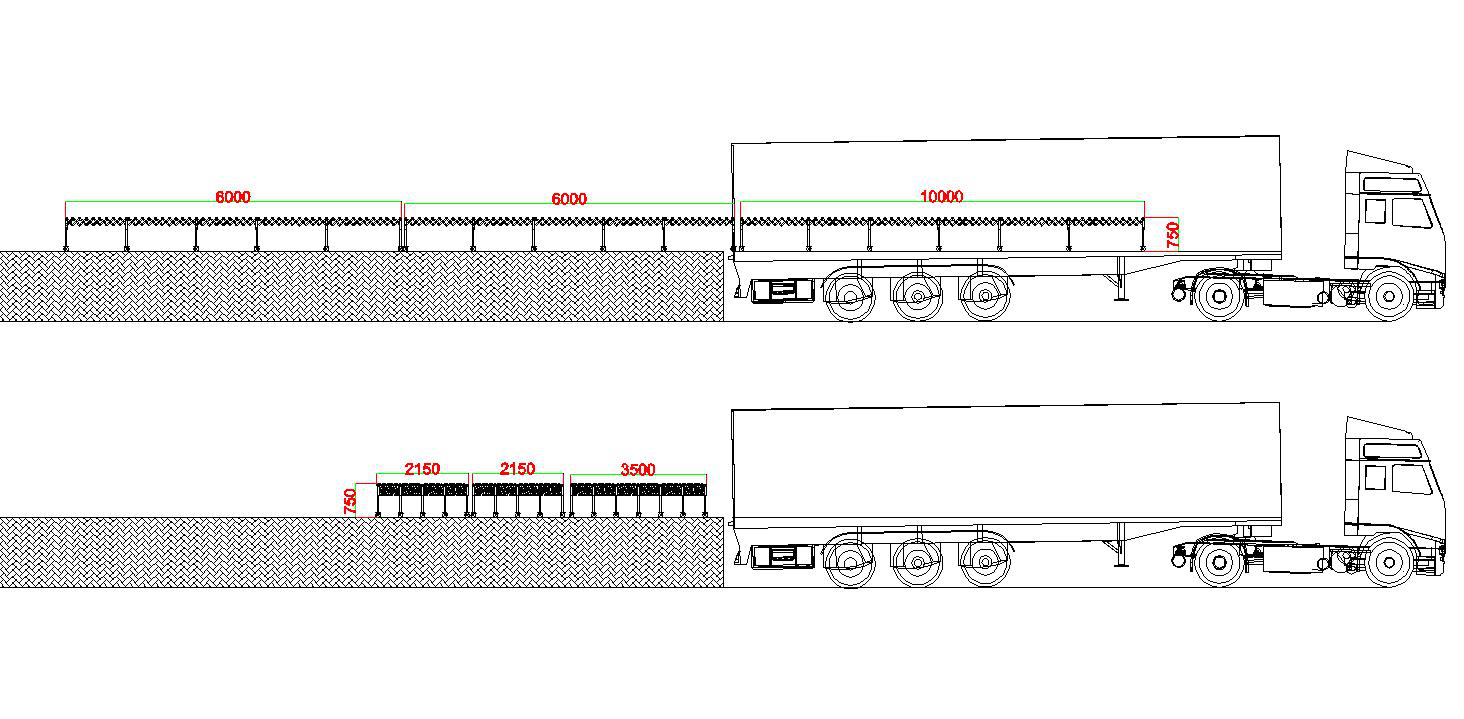
Long lines are manufactured in sections so they can be shipped and installed, then retract into a compact length when not in use.
What to send us
A configuration can normally be proposed from these seven inputs. Photos of the site are worth more than a written description.
- Whether you have a loading dock, and its height above the yard floor
- Vehicle types and body lengths you receive (including the longest)
- Container work: 20 ft, 40 ft, and whether you load from the ground
- Cargo type: bagged, cartons, foam boxes, totes or mixed parcels
- Typical carton dimensions and weight per piece
- Required reach: how far into the truck you need to place cargo
- Available power supply and the space the unit may occupy when parked
Equipment FAQ
Which line should I choose if I have a loading dock?
For sites with a loading dock where the trailer floor sits level with the platform, and for flat in-plant transport.
Which line works when I load from the ground?
For ground-level loading without a loading dock.
Can one unit handle both bagged and carton cargo?
Rubber-coated rollers for bagged cargo (woven, sack, kraft bags); bare rollers for flat-bottom cartons, foam boxes and totes.
Do you build outside the standard widths and lengths?
Each unit is a non-standard custom build to your site dimensions; long lines are built in sections and retract compactly when not in use.
What do I get before I commit to an order?
Configuration drawings showing parked and extended lengths at your site. See How we build your conveyor for the full sequence.
Tell Us About Your Loading Needs
Dock height, vehicle mix and cargo. Our team will recommend a suitable configuration and follow up with product information.
Get a Free Quote